
Author: Roger Kirby

  • Residential vs Commercial Pressure Washing: What’s the Difference?

    Residential vs Commercial Pressure Washing: What’s the Difference?

    Residential and commercial pressure washing surfaces

    Residential vs Commercial Pressure Washing

    Learn the key differences in scope, equipment, scheduling, safety, and maintenance needs so you can choose the right pressure washing service for your property in DFW.

    Pressure washing is not a one-size-fits-all service. While both residential and commercial pressure washing remove dirt, algae, mildew, oil, and surface buildup, the job requirements can be very different depending on the property type. At Apex Point Services, we help home and business owners across Garland and the DFW metroplex choose the right cleaning approach for the surface, traffic level, and long-term maintenance goals.

    If you are comparing service options, our Pressure Washing page provides an overview of the residential and commercial solutions we offer.

    Quick Answer

    Residential pressure washing usually focuses on homes, driveways, patios, fences, siding, and other exterior living spaces. Commercial pressure washing typically involves larger properties, higher-traffic surfaces, stricter scheduling requirements, and more complex safety and access considerations. The right method depends on the material being cleaned, the amount of buildup present, and how the property is used day to day.

    Residential Pressure Washing

    • Single-family homes and residential properties
    • Driveways, sidewalks, patios, pool decks, fences, and siding
    • Focused on curb appeal, surface care, and seasonal maintenance
    • Often scheduled around homeowner convenience

    Commercial Pressure Washing

    • Storefronts, offices, retail centers, restaurants, warehouses, and multi-unit properties
    • Parking areas, entryways, loading zones, dumpster pads, and flatwork
    • Focused on appearance, safety, brand image, and routine upkeep
    • Often scheduled around customer traffic and business operations

    1. Property Type and Surface Needs

    The biggest difference is the type of property being cleaned. Residential work usually centers on materials commonly found around homes, such as concrete driveways, brick walkways, vinyl siding, wood fencing, and backyard patios. Commercial work often includes larger concrete areas, storefront entries, building exteriors, service corridors, and high-use surfaces that collect dirt, gum, grease, and stains faster.

    Different surfaces require different pressure levels, detergents, and techniques. Using too much pressure on the wrong material can cause damage, which is why surface identification and method selection matter.

    2. Scale of the Job

    Residential jobs are often smaller in footprint and easier to isolate. A driveway, fence line, or patio can usually be cleaned in a relatively straightforward visit. Commercial jobs may involve larger square footage, multiple access points, public-facing entrances, and ongoing maintenance plans. In many cases, commercial properties need repeat service to keep surfaces clean, safe, and professional-looking.

    For homeowners, pressure washing is often about protecting curb appeal and preventing buildup. For businesses, it is also about presentation, safety, and maintaining a clean environment for customers, tenants, and staff.

    3. Scheduling and Operational Considerations

    Residential appointments are usually planned around homeowner availability and neighborhood considerations. Commercial work may need to happen before opening hours, after closing, or during lower-traffic periods to reduce disruption. Businesses often need a contractor who can coordinate around foot traffic, vehicles, deliveries, and access restrictions.

    That is especially important for storefronts, office properties, restaurants, and shared commercial spaces where appearance and safety affect daily operations.

    4. Safety, Runoff, and Risk Management

    Both residential and commercial pressure washing require attention to safety, but commercial environments often involve more variables. These can include pedestrian traffic, slippery walkways, larger equipment staging areas, and more sensitive operating hours. A professional contractor should evaluate access, drainage, surrounding materials, and cleaning methods before starting the job.

    For homeowners, the goal is to clean effectively without damaging siding, painted surfaces, wood, or landscaping. For commercial properties, the goal also includes minimizing disruption and maintaining a safe environment during and after service.

    5. Maintenance Frequency

    Residential properties may only need pressure washing seasonally or as buildup becomes visible. Commercial properties often benefit from a recurring schedule because high-traffic areas get dirty faster and are more visible to customers. Entryways, sidewalks, storefronts, and service areas can quickly affect first impressions if they are not maintained.

    How to Choose the Right Service

    • Identify the surfaces that need cleaning
    • Consider how much traffic the property gets
    • Think about whether appearance, safety, or both are the main priority
    • Determine whether you need one-time cleaning or ongoing maintenance
    • Work with a contractor who understands both residential and commercial requirements

    Apex Point Services provides pressure washing for homes and businesses throughout Garland and the surrounding DFW area. If you need help evaluating the right approach for your property, visit our Pressure Washing page to learn more about our services.

    Frequently Asked Questions

    Is commercial pressure washing stronger than residential pressure washing?

    Not always. The right cleaning method depends on the surface material, the type of buildup, and the condition of the area. More pressure is not always better. Professional cleaning should be matched to the surface to avoid damage.

    Can the same contractor handle both homes and businesses?

    Yes, if the contractor has experience with both types of properties. Residential and commercial jobs require different planning, but a qualified team should be able to assess each site and recommend the right process.

    How often should pressure washing be scheduled?

    That depends on the property and the amount of exposure to traffic, weather, and organic buildup. Many homes benefit from periodic cleaning, while commercial properties often need more regular maintenance.

    Request a Pressure Washing Estimate

    Whether you need residential exterior cleaning or commercial pressure washing in DFW, Apex Point Services can help you plan the right service for your property. Call (903) 513-3065 or visit our Pressure Washing page to request an estimate.


  • What Surfaces Can Be Safely Pressure Washed?

    What Surfaces Can Be Safely Pressure Washed?

    Luxury modern house exterior

    What Surfaces Can Be Safely Pressure Washed?

    A practical guide for homeowners and property managers in Garland and across DFW.

    Pressure washing can dramatically improve curb appeal, remove built-up grime, and help protect exterior materials. However, not every surface should be cleaned the same way. The safest results come from matching the cleaning method, water pressure, and detergents to the material being treated. At Apex Point Services, we help residential and commercial clients across Garland and the DFW area evaluate surfaces carefully before cleaning so the job is done effectively and responsibly.

    If you are comparing options for your property, visit our Pressure Washing page to learn more about our residential and commercial service.

    Quick Answer

    Many hard exterior surfaces can be safely pressure washed, including concrete driveways, sidewalks, some brick, stone, certain fences, and properly finished patios. More delicate materials such as painted wood, older siding, roof surfaces, and some decorative masonry often require soft washing or lower-pressure cleaning instead. The right approach depends on the age, condition, coating, and material of the surface.

    Common Surfaces That Can Often Be Pressure Washed

    • Concrete driveways and walkways: Usually good candidates for pressure washing when cleaned with the proper surface cleaner and pressure setting.
    • Patios and pool decks: Concrete and some pavers can often be cleaned safely, though joint sand and sealants should be considered.
    • Brick exteriors: Durable brick may be cleaned carefully, but older mortar joints can be vulnerable to damage.
    • Stone surfaces: Some natural stone can be cleaned, but softer stone requires extra caution.
    • Vinyl siding: Often better cleaned with a soft wash or controlled low-pressure rinse rather than aggressive pressure.
    • Fences: Wood and vinyl fences may be cleaned, but weathered wood can be damaged if pressure is too high.
    • Commercial flatwork: Sidewalks, entry areas, dumpster pads, and storefront concrete are common commercial cleaning applications.

    Surfaces That Need Extra Caution

    Usually Better for Soft Washing

    • Painted siding
    • Stucco
    • Older wood surfaces
    • Roof shingles
    • Screens and window trim
    • Decorative exterior finishes

    Why Caution Matters

    Using too much pressure can strip paint, scar wood, loosen mortar, force water behind siding, or etch concrete. That is why surface identification and condition checks matter before cleaning begins.

    How Professionals Decide What Is Safe

    • Material type: Concrete, brick, wood, vinyl, stucco, and stone all respond differently.
    • Surface age and condition: Cracked mortar, peeling paint, oxidation, and weathering affect the cleaning plan.
    • Previous coatings or sealers: Painted or sealed surfaces may need lower pressure and different detergents.
    • Location and drainage: Runoff, landscaping, and nearby doors or windows must be protected.
    • Stain type: Dirt, algae, mildew, oil, rust, and organic buildup may each require a different treatment approach.

    The safest pressure washing job is not the one with the highest pressure. It is the one that uses the right method for the surface.

    Residential and Commercial Applications

    For homes, common pressure washing projects include driveways, sidewalks, patios, fences, and selected exterior walls. For commercial properties, pressure washing is often used on storefront entries, walkways, loading areas, dumpster pads, and other high-traffic surfaces. If you manage a business property in DFW, clean exterior surfaces can improve appearance, reduce slip hazards from buildup, and support a better first impression for customers and tenants.

    When to Avoid DIY Pressure Washing

    • If the surface is older, painted, cracked, or already deteriorating
    • If you are unsure whether the area should be pressure washed or soft washed
    • If the cleaning area is near windows, electrical fixtures, landscaping, or roof edges
    • If oil, rust, algae, or deep staining requires specialized treatment
    • If you want a cleaner result without risking surface damage

    Pressure Washing FAQ

    Can pressure washing damage concrete?

    Yes. Incorrect pressure, poor technique, or using the wrong nozzle can leave visible lines or etching. Concrete should be cleaned with the right equipment and settings for the slab condition.

    Is vinyl siding safe to pressure wash?

    Vinyl siding can often be cleaned safely, but lower-pressure methods are usually preferred. Spraying water upward or using excessive force can push moisture behind the siding.

    Can brick always be pressure washed?

    Not always. Newer brick may handle cleaning well, but older brick and deteriorating mortar joints need a more cautious approach.

    What is the difference between pressure washing and soft washing?

    Pressure washing uses stronger water force for durable surfaces. Soft washing relies on lower pressure and cleaning solutions for more delicate materials.

    Need Help Evaluating a Surface?

    Apex Point Services provides residential and commercial pressure washing services in DFW. If you are unsure whether a driveway, patio, fence, siding section, or commercial surface can be cleaned safely, our team can help you determine the right method before work begins.

    For service details, visit our Pressure Washing page or contact us to request a free estimate.

  • How Often Should You Pressure Wash Your Home in North Texas?

    How Often Should You Pressure Wash Your Home in North Texas?

    North Texas home exterior

    How Often Should You Pressure Wash Your Home in North Texas?

    A practical homeowner guide for Garland, Rowlett, Rockwall, Dallas, and surrounding DFW communities.

    In North Texas, most homes benefit from professional pressure washing about once every 12 to 18 months. However, the right schedule depends on your home’s exterior material, tree coverage, shade, storm exposure, traffic dust, and whether you are dealing with mildew, algae, pollen, or red dirt buildup. In areas like Garland, Rowlett, Rockwall, and Dallas, seasonal weather swings can make exterior surfaces look dirty faster than many homeowners expect.

    If your siding, brick, driveway, patio, fence, or walkway is showing visible staining, slippery growth, or heavy grime, it may be time to schedule service sooner. If you need help evaluating your property, visit our Pressure Washing page to learn more about residential and commercial exterior cleaning in DFW.

    Quick Answer

    • House siding: every 12 to 18 months
    • Driveways and sidewalks: every 6 to 12 months
    • Patios and pool decks: every 6 to 12 months
    • Fences: every 12 to 24 months
    • Commercial storefronts and flatwork: often quarterly or more frequently depending on traffic

    Why North Texas Homes Get Dirty Faster

    North Texas properties deal with a mix of environmental conditions that speed up exterior buildup. Wind carries dust and debris across siding and masonry. Spring pollen coats trim, porches, and windows. Humid stretches can encourage mildew and algae on shaded walls, fences, and concrete. Storm season can also leave behind mud splash, organic debris, and staining around foundations and walkways.

    For many DFW homeowners, pressure washing is not just about appearance. It also helps reduce slippery surfaces, remove organic buildup, and protect curb appeal between larger exterior maintenance projects.

    Recommended Pressure Washing Schedule by Surface

    Siding and Exterior Walls

    Most homes should have siding or exterior wall surfaces cleaned every 12 to 18 months. Homes with heavy shade, nearby trees, or recurring mildew may need more frequent service. Softer materials may require a lower-pressure soft washing approach rather than aggressive pressure.

    Driveways and Sidewalks

    Concrete driveways and sidewalks often need cleaning every 6 to 12 months in North Texas. Vehicle traffic, oil drips, tire marks, dirt, and storm runoff can make these surfaces look worn quickly. Regular cleaning can improve appearance and reduce slick spots caused by algae or grime.

    Patios, Pool Decks, and Outdoor Living Areas

    Outdoor entertaining areas usually benefit from washing every 6 to 12 months, especially before spring and summer use. This is particularly helpful for homeowners maintaining patios, pergolas, and outdoor spaces in communities across the DFW area.

    Fences and Wood Surfaces

    Wood fences and similar surfaces are often cleaned every 12 to 24 months, depending on exposure and finish condition. These areas should be handled carefully to avoid surface damage. Lower pressure and the right cleaning method matter.

    Signs Your Home May Need Pressure Washing Sooner

    • Green or black streaks on siding or brick
    • Slippery concrete around walkways or patios
    • Heavy pollen, dust, or cobweb buildup
    • Noticeable discoloration on fences or retaining walls
    • Mud splash and staining after storms
    • You are preparing to sell your home or improve curb appeal

    Is Annual Pressure Washing Worth It?

    For many homeowners, yes. Annual or near-annual cleaning helps maintain a cleaner appearance and can support routine exterior upkeep. It is especially useful before listing a home, after storm season, or when preparing for painting, staining, or other improvement work. For business owners, more frequent service may be appropriate to keep storefronts, entryways, and customer-facing concrete looking professional.

    Choosing the Right Cleaning Method

    Not every surface should be cleaned the same way. Concrete can often handle stronger pressure, while siding, painted surfaces, and some wood materials may require soft washing or a lower-pressure approach. Using the wrong method can damage finishes, force water behind materials, or leave visible marks. That is why surface evaluation matters before cleaning begins.

    Local Considerations for Garland and DFW

    Apex Point Services is based in Garland, TX and serves homeowners and commercial clients across the DFW metroplex. Local weather, dust, tree coverage, and storm activity all affect how often exterior cleaning is needed. If you are comparing maintenance timing with other exterior projects, you may also want to review our Services page or learn more About Apex Point Services.

    Final Answer

    As a general rule, homeowners in North Texas should plan on pressure washing their home every 12 to 18 months, with concrete and high-traffic outdoor surfaces cleaned more often. If your property has visible buildup, slippery areas, or storm-related staining, it may be smart to schedule service sooner.

    Need help with residential or commercial exterior cleaning? Visit our Pressure Washing page or call (903) 513-3065 to request a free estimate.

  • Why Pressure Washing Matters Before Painting, Staining, or Property Sale

    Why Pressure Washing Matters Before Painting, Staining, or Property Sale

    Exterior of a residential house with lights on at dusk

    Why Pressure Washing Matters

    Before painting, staining, or listing a property for sale, a proper wash can improve appearance, surface prep, and buyer perception. For homeowners and commercial property owners across DFW, pressure washing is often one of the simplest ways to protect the next step in the project.

    At Apex Point Services, we work with residential and commercial clients throughout Garland, Rockwall, Rowlett, Dallas, and the surrounding DFW area. One issue we see often is this: surfaces are painted, stained, or put on the market before they are properly cleaned. Dirt, mildew, algae, oxidation, and surface buildup can affect how a property looks and how well coatings perform.

    That is why pressure washing services are not just about curb appeal. In many cases, they are a practical first step before exterior improvements, maintenance work, or a property sale.

    Why cleaning first matters

    • Paint and stain adhere better when surfaces are free from dirt, chalking, mildew, and loose contaminants.
    • Property photos look better for listings, marketing, and buyer walkthroughs.
    • Surface issues become easier to spot, including damaged trim, cracked caulk, rotted wood, and worn finishes.
    • Buyers and customers notice maintenance, which can improve confidence in the condition of the property.

    Before painting or staining

    Whether you are planning to repaint siding, stain a fence, refresh a deck, or improve exterior trim, cleaning the surface first is part of responsible preparation. Buildup left behind can interfere with finish quality and shorten the life of the work. Pressure washing helps remove grime, mildew, pollen, and residue so the next contractor step starts on a cleaner foundation.

    Pressure washing is not a substitute for repairs or full prep work, but it is often the right first move before painting, staining, sealing, or exterior touch-ups.

    Before listing a property for sale

    First impressions matter in real estate. A driveway with dark buildup, stained siding, dirty brick, or weathered walkways can make a property feel less maintained than it really is. Pressure washing can help a home or commercial property present better online and in person without the cost of a major renovation.

    • Improves curb appeal for listing photos
    • Helps entry paths, patios, and driveways look cleaner
    • Supports a more cared-for appearance during showings
    • Can complement other pre-sale improvements such as minor repairs and exterior touch-ups

    Common surfaces that benefit

    • House siding
    • Brick exteriors
    • Driveways
    • Sidewalks
    • Patios
    • Fences
    • Deck areas
    • Commercial storefronts

    What property owners should know

    Not every surface should be treated the same way. Material type, age, condition, and surrounding landscaping all matter. A professional approach helps reduce the risk of unnecessary damage and ensures the cleaning method fits the surface. That is especially important before applying paint or stain, when the goal is to improve readiness rather than just make the area look better for a day.

    Pressure washing in DFW

    In North Texas, exterior surfaces deal with dust, pollen, heat, storms, humidity, and seasonal buildup. That combination can leave homes and commercial properties looking worn faster than owners expect. For many DFW properties, periodic pressure washing is a practical maintenance step that supports appearance, upkeep, and future project quality.

    If you are planning exterior improvements or preparing a property for sale, visit our Pressure Washing page to learn more about service options for residential and commercial properties.

    Final takeaway

    Pressure washing can be a smart first step before painting, staining, sealing, or listing a property. It improves presentation, supports better prep, and helps owners make more informed decisions about the next phase of work. For many homes and businesses, it is one of the most cost-effective ways to improve exterior readiness.

    Get a pressure washing estimate

    Apex Point Services provides pressure washing for residential and commercial properties across Garland and the DFW metroplex. Call (903) 513-3065 or visit our Pressure Washing page to request a free estimate.

  • Contractor FAQ: Everything You Need to Know About Hiring Apex Point Services in North Texas

    Apex Point Services | Family-Owned. Veteran-Owned. Texas Proud.

    Whether you’re a homeowner planning a renovation, a property manager coordinating repairs, or a business owner considering a new build, choosing the right contractor matters. Below are honest answers to the questions our clients ask most — covering general contracting, roofing, remodeling, licensing, pricing, and what to expect when you work with Apex Point Services across Dallas-Fort Worth, North Texas, and East Texas.

    What is a general contractor, and what do they do?

    A general contractor is an individual or business that manages the full scope of a construction project under a binding agreement. Rather than performing every trade themselves, a general contractor coordinates the people, schedules, materials, subcontractors, inspections, and quality standards required to bring a project from planning to completion. At Apex Point Services, we serve as the single point of accountability for every project — meaning you get one team to call, one clear scope, and consistent communication from start to finish.

    What services does Apex Point Services provide?

    Apex Point Services is a full-service Texas general contractor offering residential construction, commercial construction, roofing (repair and replacement), remodeling (kitchen, bathroom, and interior), commercial improvements, and tenant improvements. We manage everything from new home builds and additions to office fit-outs, exterior upgrades, and storm damage recovery.

    What areas do you serve?

    We serve Dallas-Fort Worth, North Texas, and East Texas, including communities across Dallas County, Rockwall County, Kaufman County, Collin County, and Hunt County. Specific cities we serve include Dallas, Garland, Mesquite, Rockwall, Heath, Rowlett, Wylie, Plano, McKinney, Forney, Royse City, Terrell, and Greenville. If you’re in the surrounding area and aren’t sure whether we cover your location, contact us — we’re happy to discuss your project.

    Do general contractors need a license in Texas?

    Texas does not require a statewide general contractor license for most residential and commercial construction. However, contractors in Texas must carry general liability insurance, and certain trade work (electrical, plumbing, HVAC) requires licensed subcontractors. Apex Point Services is General Liability insured and works only with properly credentialed trade partners, so your project is protected at every stage.

    Do roofing contractors need to be licensed in Texas?

    Texas does not require a statewide roofing license, but some municipalities and counties have local registration or permitting requirements. Reputable roofing contractors pull required permits, coordinate inspections, and document installations properly. Apex Point Services handles all required permitting and inspection coordination as part of our standard process, giving you a fully documented project from start to finish.

    Are your projects bonded?

    Yes, where required, we use surety bonds for our projects. A surety bond is a form of financial guarantee that protects you if we fail to complete the job or meet our financial obligations, such as paying subcontractors. It’s another way we ensure your investment is secure. We can provide documentation of our current general liability insurance and bonding upon request.

    How can I verify a contractor’s license and insurance?

    We encourage all homeowners and property owners to do their due diligence. We are happy to provide you with a copy of our current certificate of insurance upon request. You can also verify a contractor’s status through your local municipal licensing body or relevant Texas state boards, such as the Texas Department of Licensing and Regulation (TDLR) for applicable trades.

    When should a roof be repaired versus replaced?

    The right choice depends on the roof’s age, the extent of damage, and whether issues are isolated or widespread. Roof repair is typically the right call for localized hail hits, minor wind-lifted shingles, isolated flashing failures, or small leak sources. Roof replacement becomes the more practical option when a roof has widespread storm damage, repeated leak history, aging that has compromised the full system, or significant hail impact across multiple sections. Because North Texas weather — with its frequent hail, high winds, and temperature extremes — accelerates roof wear, we always provide an honest assessment before recommending a direction.

    How much does a roof replacement cost in North Texas?

    Roof replacement costs in North Texas vary based on roof size, pitch, material choice (asphalt shingles, metal, etc.), and project complexity. Most residential roof replacements in the Dallas-Fort Worth area range from several thousand dollars for smaller homes to significantly more for larger structures or premium materials. We provide detailed estimates tailored to your specific property so you know exactly what to expect before work begins — no surprises.

    How much do general contractors charge?

    General contractors typically charge through one of three structures: a fixed-price contract, a cost-plus arrangement (materials + labor + a contractor fee), or a time-and-materials agreement. The right structure depends on the project type and scope. Apex Point Services provides clear, written estimates so you understand what is included, what it costs, and why — because our founder Roger Kirby started this company specifically to address the lack of transparency he saw clients experience when working with contractors.

    How much does a kitchen or bathroom remodel cost?

    Remodeling costs vary widely based on the size of the space, material selections, the extent of layout changes, and whether plumbing or electrical work is involved. A bathroom remodel can range from a modest refresh to a full gut renovation. Kitchen remodels vary from cabinet and countertop updates to full structural reconfiguration. We work with you during the planning phase to align the scope with your budget and your long-term goals for the space.

    Why should I hire a general contractor instead of managing a project myself?

    Self-managing a construction project requires coordinating multiple licensed subcontractors, sourcing and scheduling materials, managing inspections, tracking costs, resolving conflicts between trades, and staying on top of code compliance — all while holding your regular job and life responsibilities. A general contractor handles all of this as their core function. The time, stress, and risk exposure saved often more than offsets the contractor’s fee, and the outcome is typically more reliable when a professional is accountable for the full scope.

    How do I find a good contractor in North Texas?

    Look for a contractor who is insured, pulls proper permits, provides written scopes and contracts, communicates proactively, and has verifiable local work you can review. Ask for references, check online reviews, and pay attention to how they answer your questions during the first call — responsiveness and transparency before the contract is signed usually reflect how the project will go. Apex Point Services was built around exactly these standards, and we encourage every client to ask the questions that matter before hiring anyone.

    Should I hire a general contractor for a bathroom remodel?

    For a straightforward cosmetic refresh — new fixtures, paint, hardware — many homeowners manage the work themselves or hire individual tradespeople. For anything involving moving walls, relocating plumbing, changing electrical, or managing multiple trades in a small space on a tight timeline, a general contractor adds real value by coordinating the sequencing, managing the trades, and keeping the project from stalling between steps.

    How early should I contact a contractor?

    The earlier the better. Engaging a contractor during the planning phase — before you’ve finalized scope, budget, or timeline — allows us to give you honest feedback about what is realistic, flag any site or permitting considerations early, and help you prioritize. Clients who contact us early typically experience smoother projects and fewer surprises than those who call after plans are locked in.

    Can you handle both residential and commercial projects?

    Yes. Apex Point Services works with homeowners, property managers, and business owners across North Texas and East Texas. Our residential and commercial project experience includes new builds, additions, office build-outs, tenant improvements, retail upgrades, roofing, and remodeling — all with the same standard of professional oversight and communication.

    What makes Apex Point Services different from other contractors?

    Apex Point Services was founded in 2025 by Roger Kirby, a U.S. Army veteran who worked as a subcontractor and saw firsthand how often clients overpay when the process lacks transparency. We built this company around the principles of honest communication, disciplined project management, and quality craftsmanship that holds up over time. We’re family-owned, veteran-owned, General Liability insured, and committed to relationships that extend beyond the final walkthrough. We don’t just complete projects — we build trust.

    How do I get started with Apex Point Services?

    Call us at (903) 513-3065 or visit our Contact page. Tell us about your property, your goals, and your timeline. We’ll review the scope, answer your questions, and walk you through the next step toward a detailed estimate. There’s no pressure and no obligation — just a straightforward conversation with a team that wants your project to succeed.

    Apex Point Services — Built to Work. Built to Last. Serving Dallas-Fort Worth, Rockwall County, Collin County, Kaufman County, Hunt County, and surrounding North Texas and East Texas communities. Call (903) 513-3065.

    About Apex Point Services

    Apex Point Services is a family-owned, veteran-owned general contractor serving North Texas. We provide roofing, remodeling, residential construction, commercial construction, and property improvements across Dallas-Fort Worth, Rockwall County, Collin County, Kaufman County, Hunt County, and surrounding communities.

    Our team is led by Roger Kirby, a U.S. Army veteran with over 20 years of hands-on construction experience. We built this company on the belief that clients deserve honest communication, organized project management, and quality workmanship — not just a low bid and a handshake.

    Ready to discuss your project? Call (903) 513-3065, email info@apexpointservices.com, or visit our Contact page to request a free estimate. We serve clients throughout North Texas and are happy to answer questions before you decide to move forward.

  • Pipe Burst in Rowlett, TX — Full Flooring, Painting, and Restoration

    Pipe Burst in Rowlett, TX — Full Flooring, Painting, and Restoration

    When a pipe bursts inside a home, what starts as a plumbing emergency quickly becomes a whole-house project. That’s exactly what happened at this home in Rowlett, Texas — and when the homeowners needed someone to take the job from gutted floors to move-in ready, they called us. We handled everything connected to pipe burst flooring repairs and restoration in Rowlett TX with expertise.

    Rowlett is the kind of city where people have put real money and real care into their homes. These aren’t starter houses — they’re custom builds with stone walls, iron staircases, vaulted ceilings, and finishes that matter. When water damage hits a home like this, you can’t just throw down cheap flooring and call it done. The whole point is to bring it back to what it was — or better. Our experience with pipe burst flooring projects in Rowlett TX means we focus on premium results.

    That’s the standard we held ourselves to on this one.

    What the Pipe Burst Left Behind

    Burst pipes in North Texas homes are more common than most people think. Rowlett, Garland, Sachse, Wylie — the DFW area gets enough hard freezes to catch homeowners off guard, especially in years when temperatures drop fast and stay there. When the water finally got turned off and the remediation crew finished, what was left was subfloor throughout much of the first and second floors, damaged walls, and water-stained trim throughout. Repairing after a pipe burst flooring disaster in Rowlett TX is never as simple as it appears.

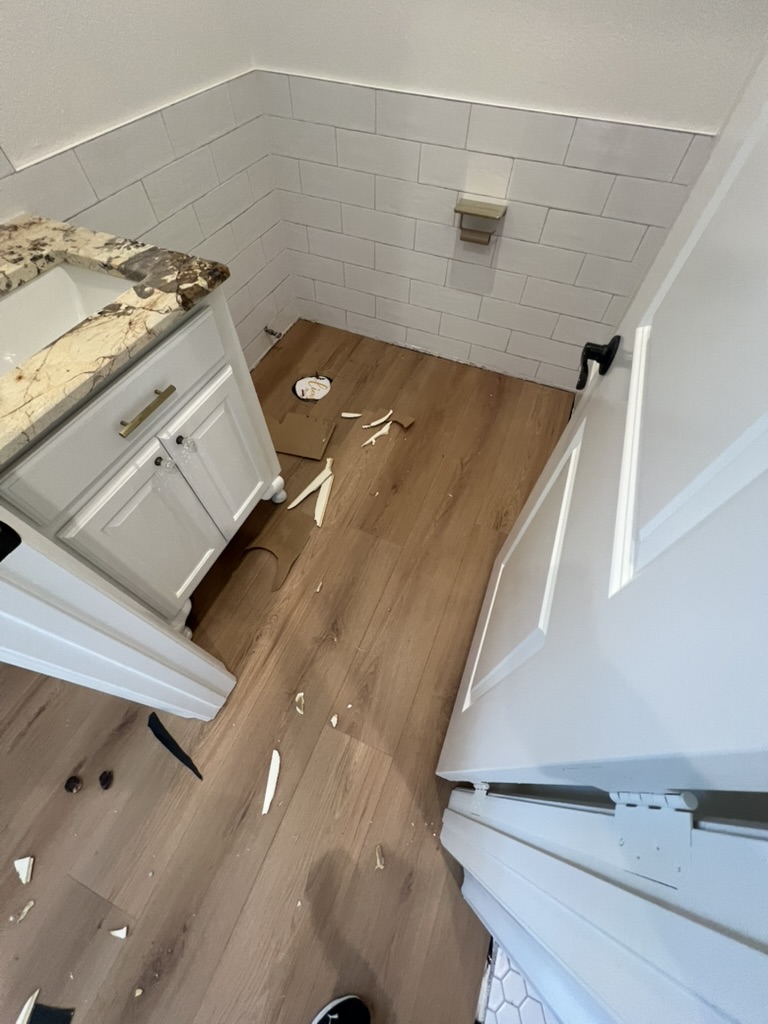
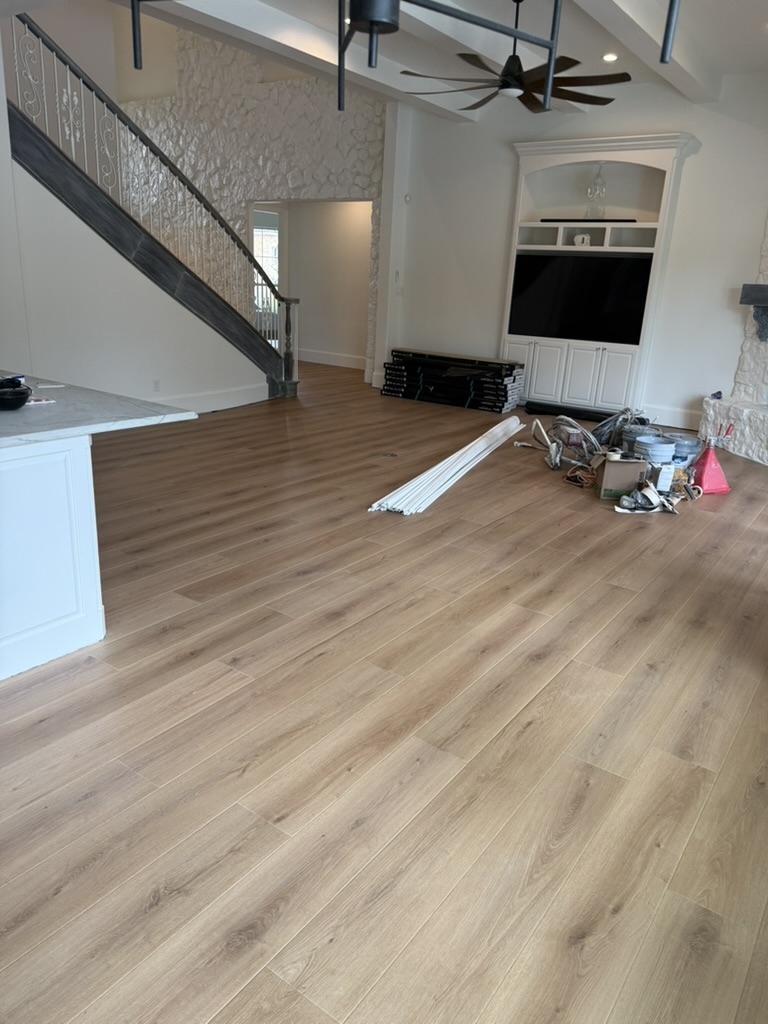
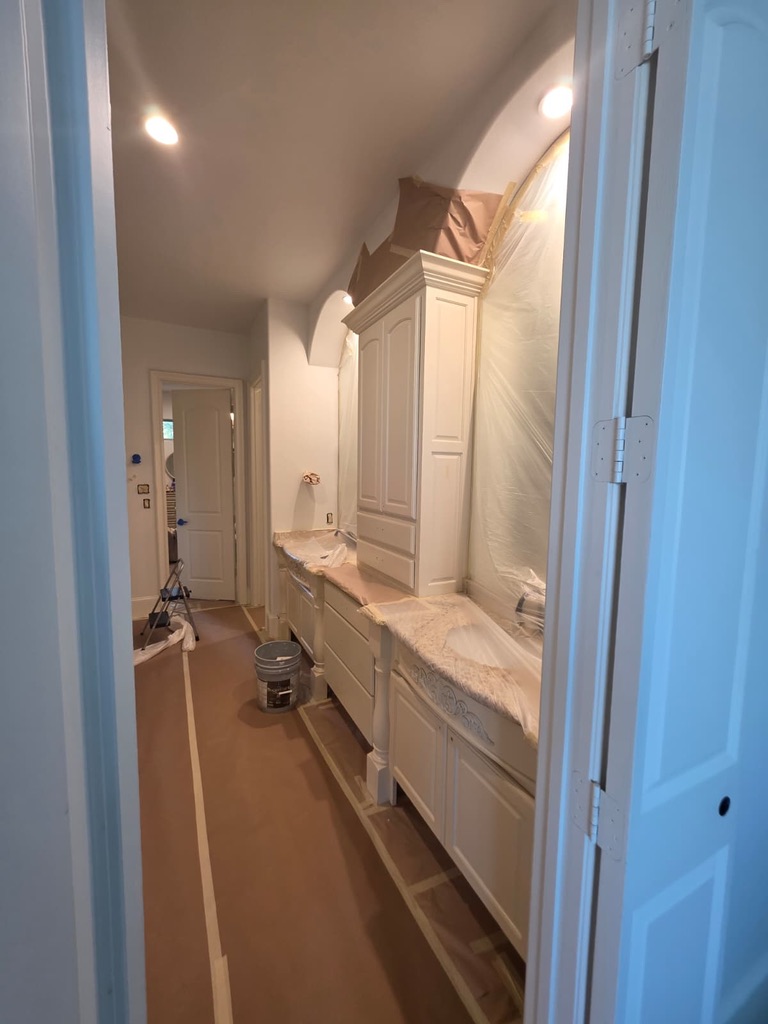
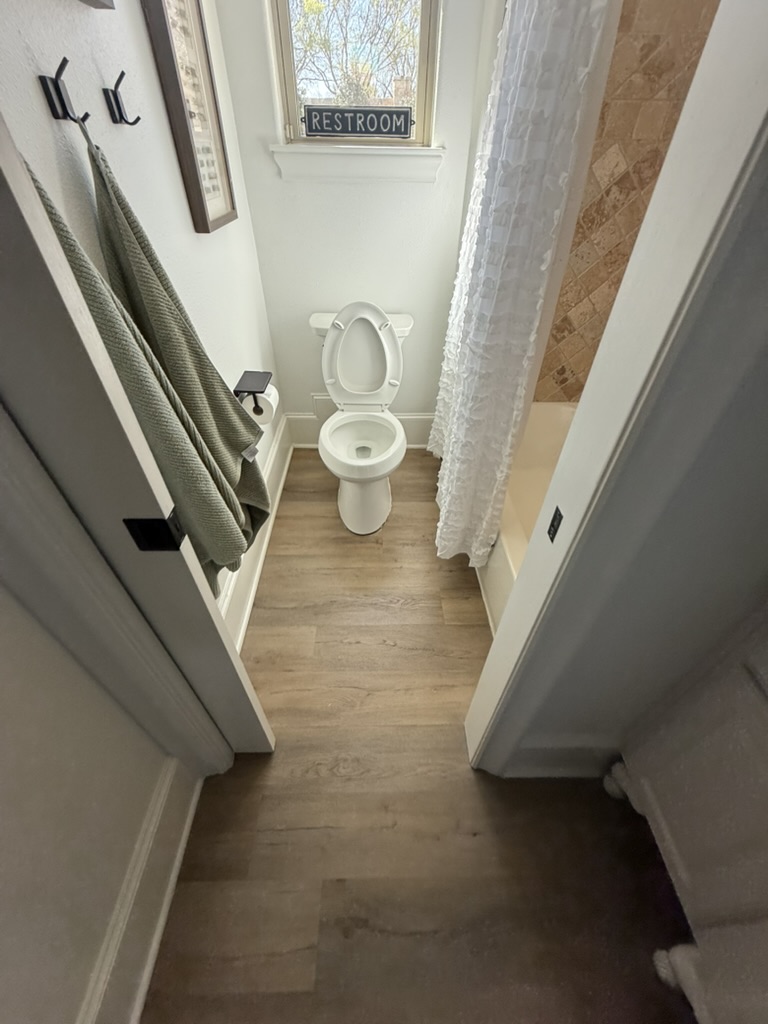
    The scope we took on included full LVP flooring installation across the entire home — living areas, bedrooms, hallways, bathrooms, the entry, and the staircase landing. On top of that, the walls and ceilings needed fresh paint throughout, with proper masking and prep so the finish work actually held. Every fixture, cabinet face, piece of trim, and recessed light had to be masked before a brush or roller touched anything. After a pipe burst, flooring restoration in Rowlett TX means taking care of every detail from start to finish.

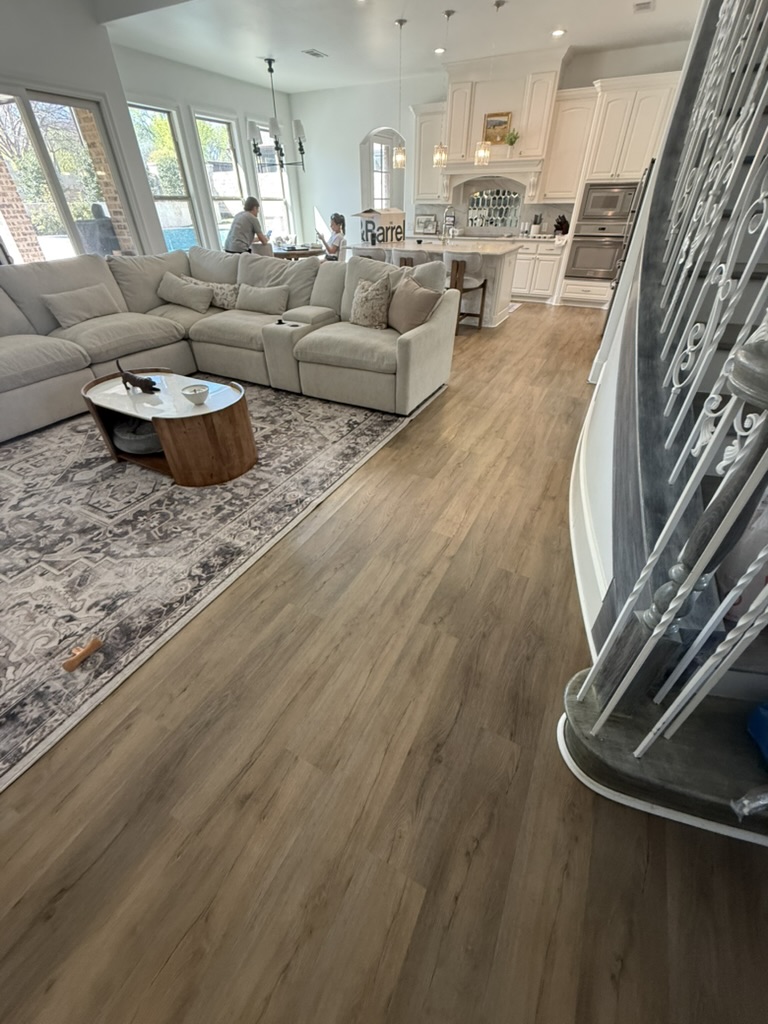
    Completed LVP flooring installation in open plan living area and kitchen, Rowlett TX
    The open-plan living and kitchen area after flooring was complete. The family was back in the space the same week.

    The Flooring: Every Room, One Crew

    We installed luxury vinyl plank throughout the entire home. LVP was the right call here for a few reasons. It handles moisture better than traditional hardwood, which matters in a home that’s already experienced a water event. It’s also durable enough for a busy household — and it looks the part in a home this nice. Addressing pipe burst flooring repairs in Rowlett TX, we always select materials that stand up to future water exposure.

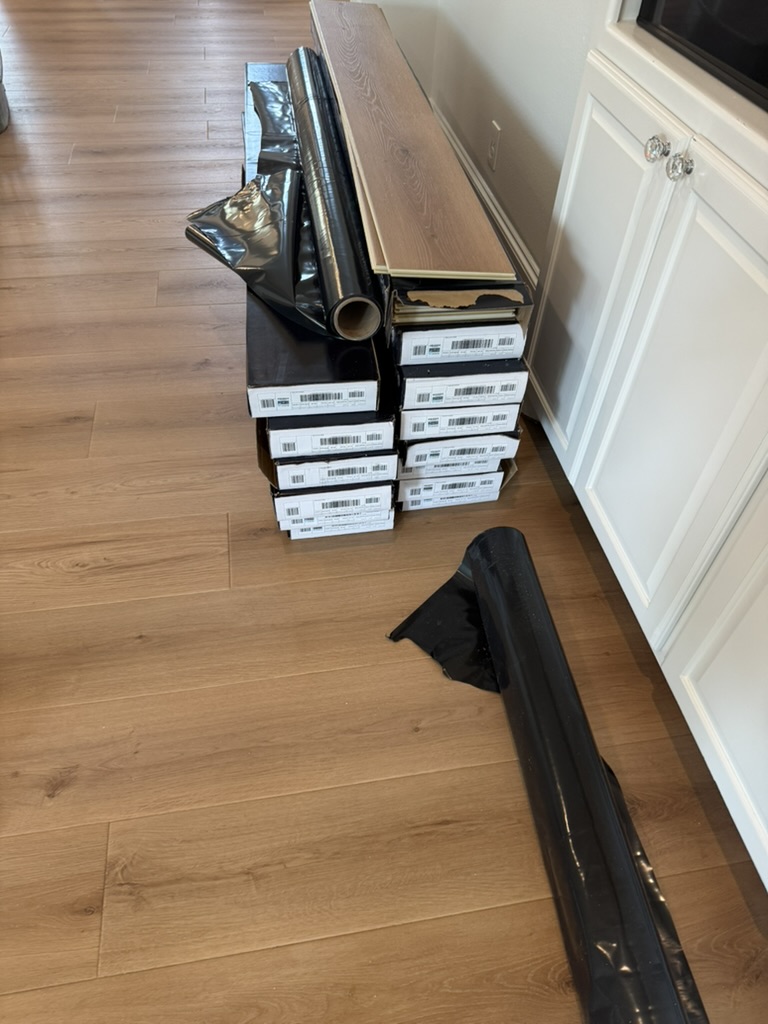
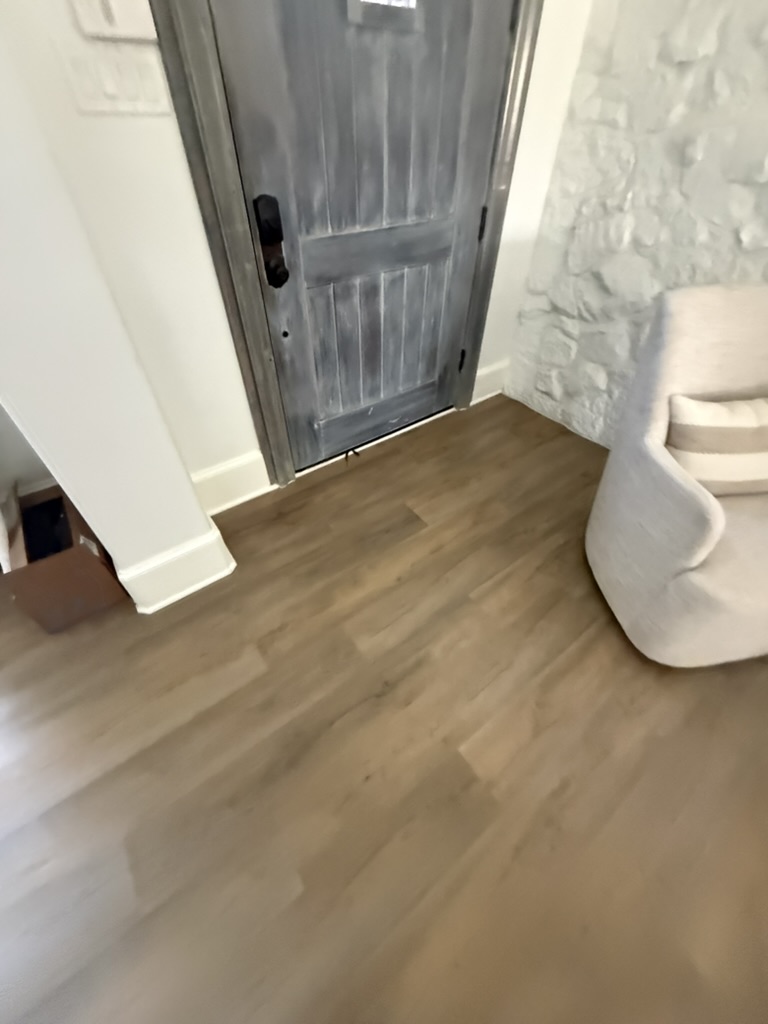
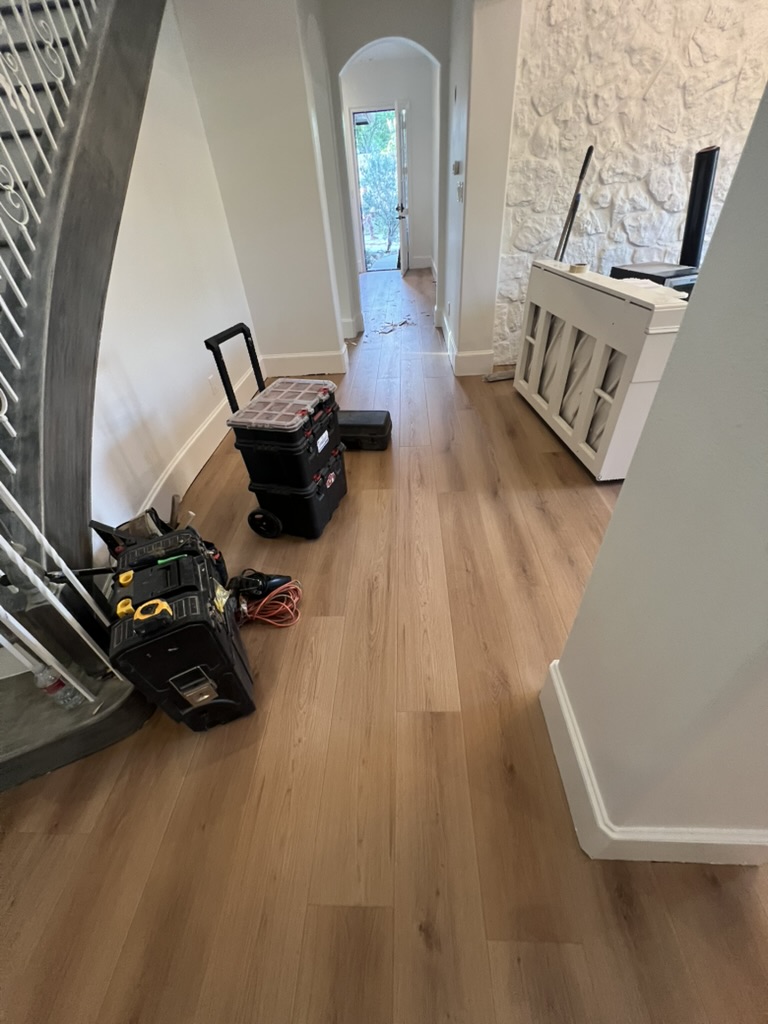
    We staged the materials room by room and worked systematically through the house — starting with the main living areas and working outward through the hallways, up the stairs, into the bedrooms, and through every bathroom. Getting the transitions right between rooms and at thresholds is where the craftsmanship shows. When you can walk from the foyer through the living room into the kitchen and it all reads as one consistent floor, the job is done right.

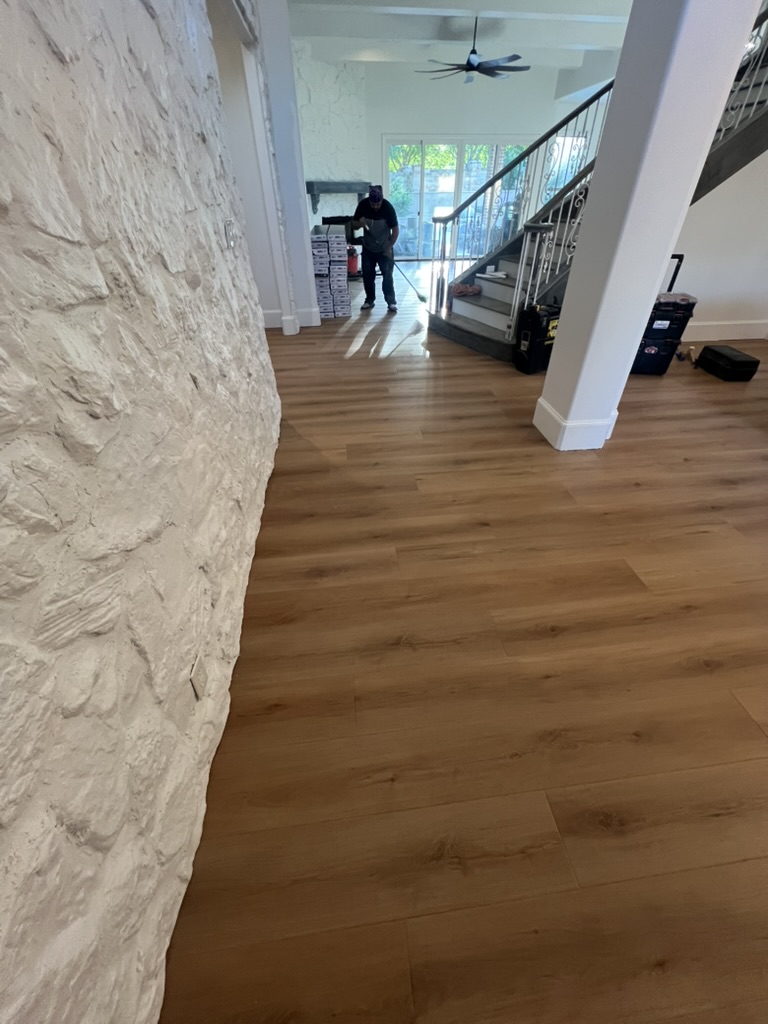
    Apex Point Services crew installing LVP flooring next to stone accent wall in Rowlett TX home
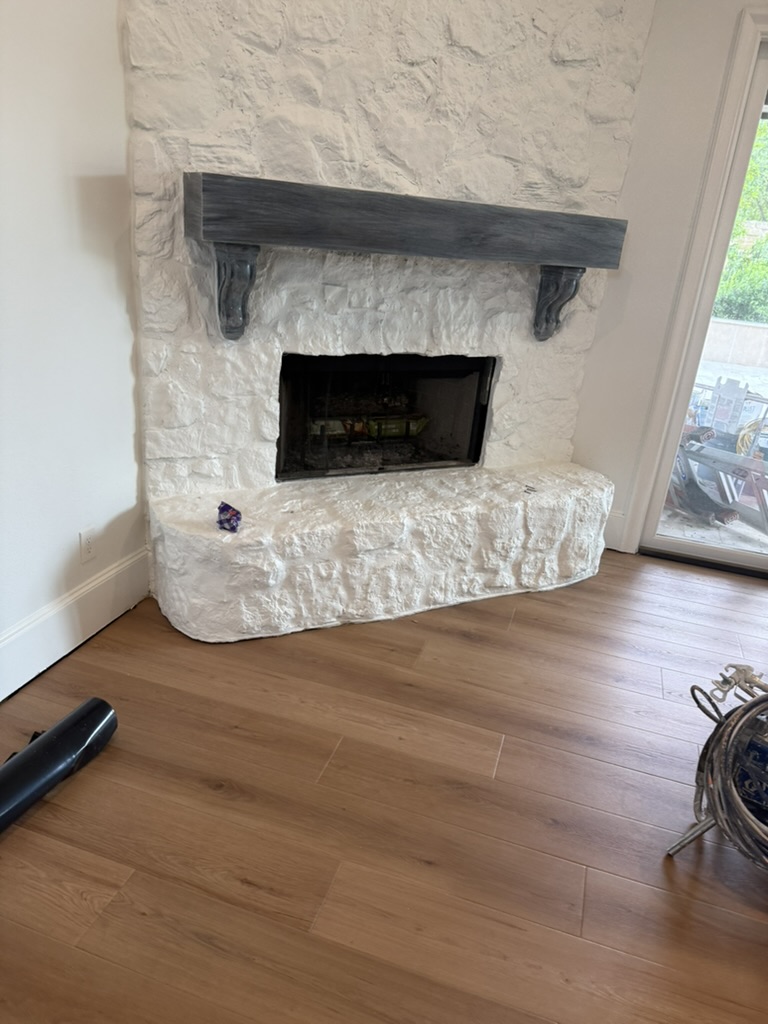
    Our crew working through the main living area. The white stone wall is a signature feature of homes in this part of Rowlett.

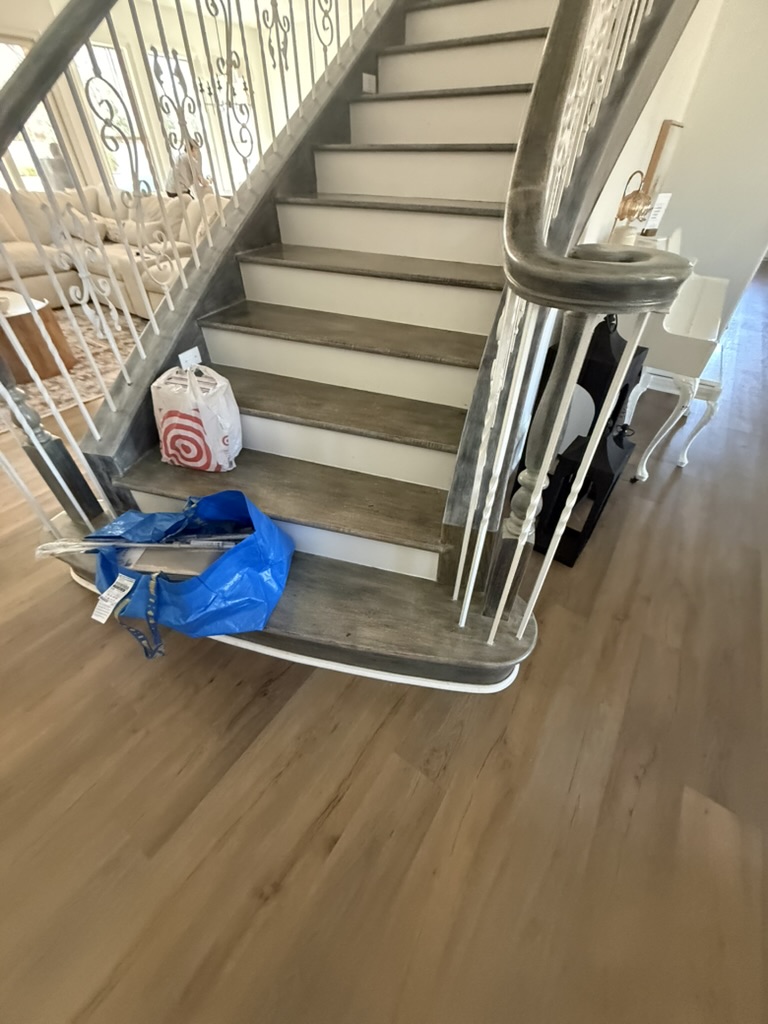
    The staircase got the same treatment — new treads and risers to match the floor, keeping the custom iron banister and gray-stained wood detail that made the staircase a focal point in the first place.

    The Paint: Full Interior, Done the Right Way

    Interior painting after water damage isn’t just about color. The walls had been exposed to moisture, which means any paint going on top needs to go on a properly prepped surface — primed, dried out, and ready. We primed every affected wall before the finish coat went on, making sure to address any pipe burst flooring Rowlett TX needs along the way.

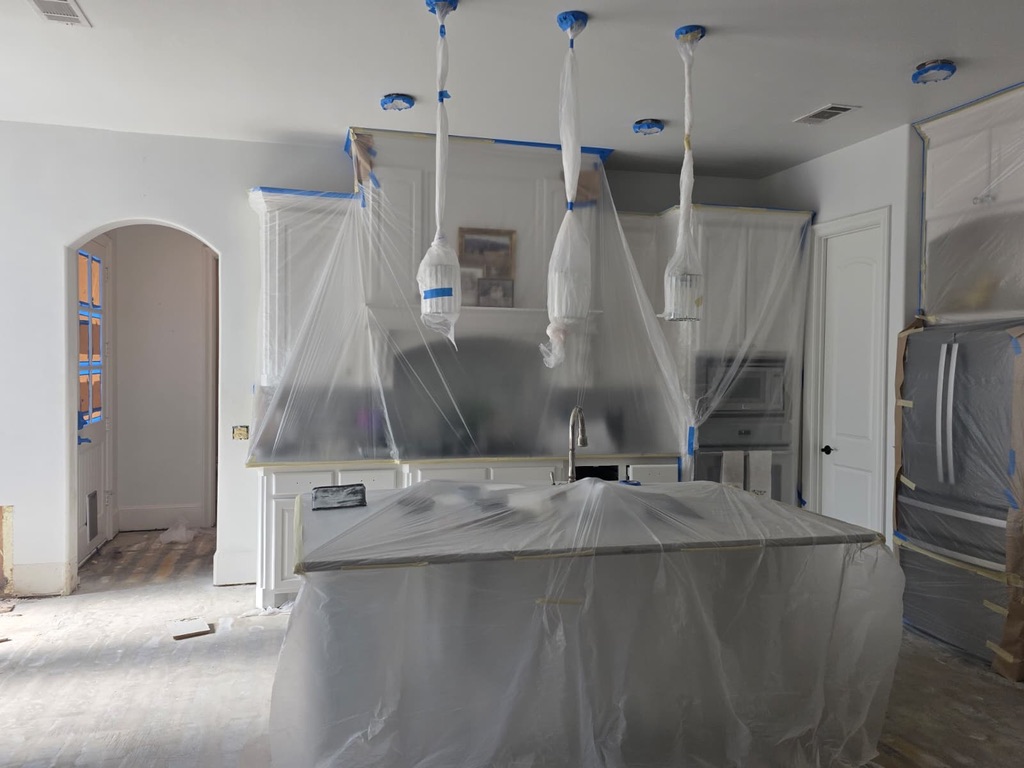
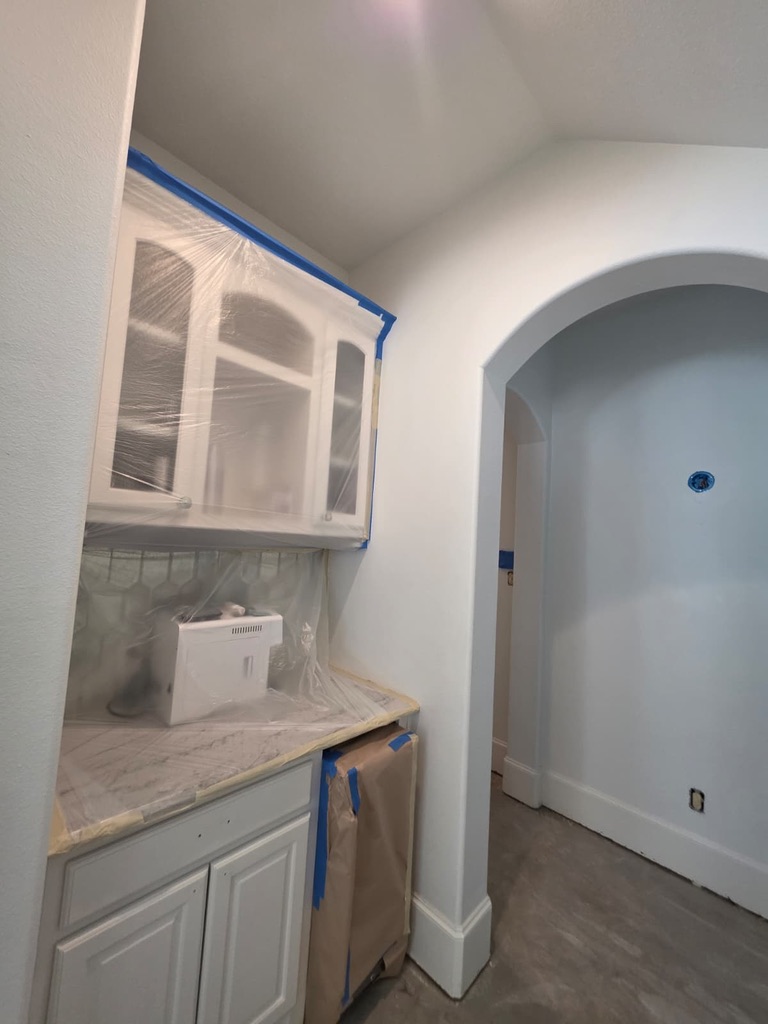
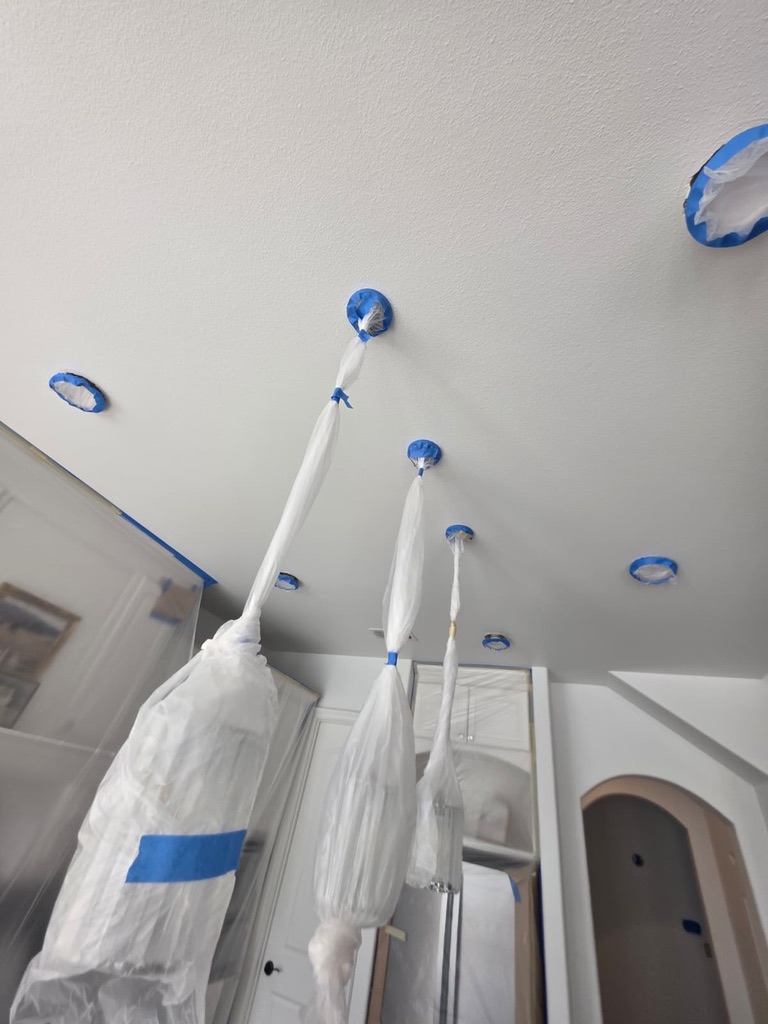
    Before any spraying or rolling started, we masked every surface that wasn’t getting painted cabinets wrapped in plastic, countertops covered, recessed lights bagged, and pendant fixtures bundled. This home had a kitchen with four pendant lights over the island alone. Every one of them got individually wrapped. That’s not optional. That’s just how you protect a client’s finishes.

    Kitchen pendants and fixtures wrapped and masked before interior painting, Rowlett TX
    Every pendant, every fixture, every cabinet wrapped before the first drop of paint went up.

    The result was crisp, clean walls throughout — no overspray on the stone fireplace surround, no paint on the cabinet hardware, no mess left behind. The homeowners walked through before we finished and didn’t find a single issue.

    Why Rowlett Homeowners Call Us

    Homes in Rowlett — especially in the newer subdivisions off Dalrock Road, near Lake Ray Hubbard, in Schrade Road communities, and out toward the Wylie city limits — tend to be well-built, well-appointed, and owned by people who pay attention. When something goes wrong, they’re not looking for a bargain. They’re looking for someone who can show up, understand the scope, and get it right. Because we’ve handled pipe burst flooring issues in Rowlett TX, clients trust our commitment to quality.

    We’ve done enough work in Rowlett and the surrounding cities — Garland, Sachse, Wylie, Murphy, and Rockwall — to understand what these homes require. We know the stone accent walls, the vaulted entryways, the open-plan kitchens with high-end appliances. We’ve worked in homes like this enough times to know where the work is and how to get it done without causing new problems in the process.

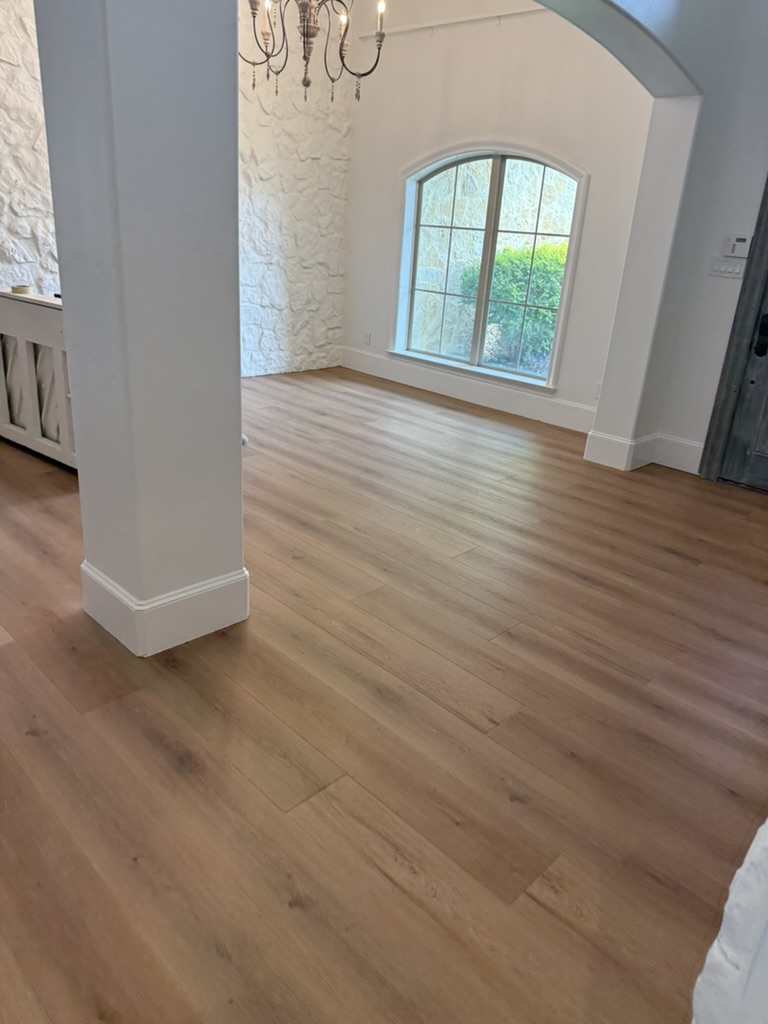
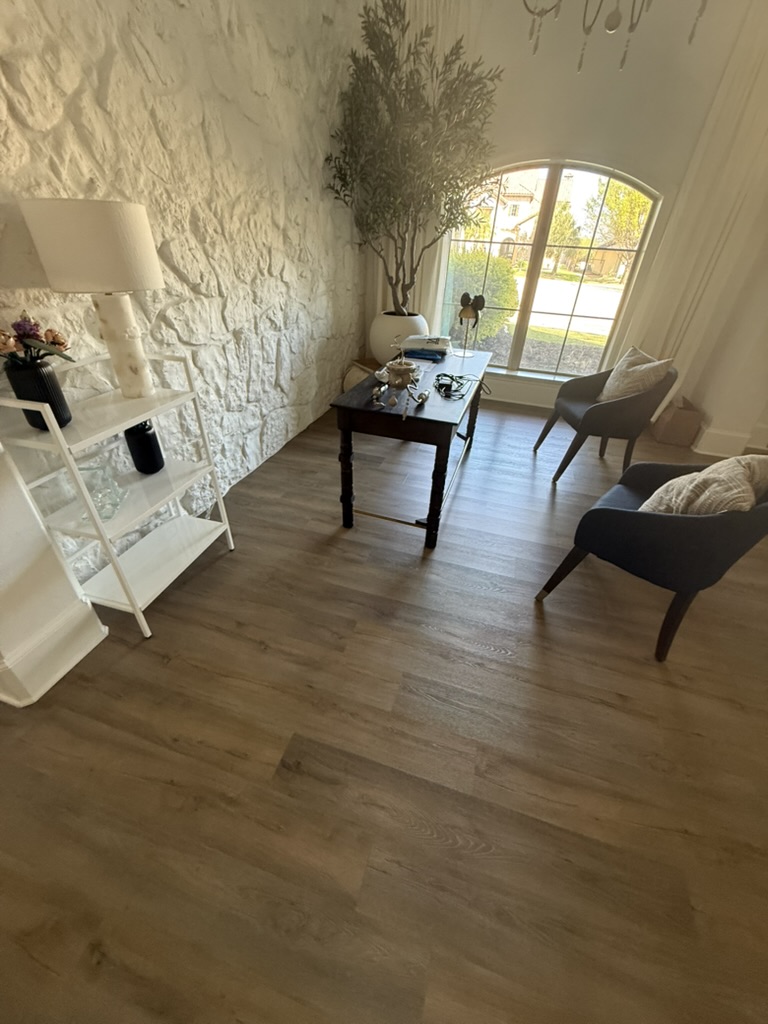
    Restored sitting room with new LVP flooring and painted walls after pipe burst damage, Rowlett TX
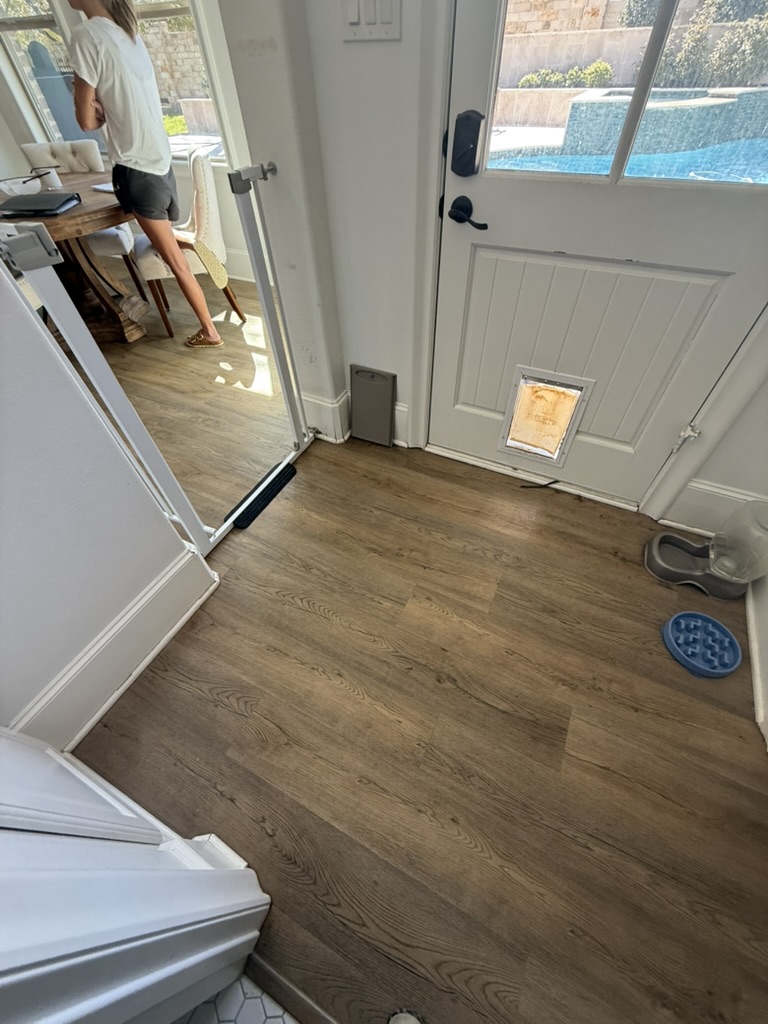
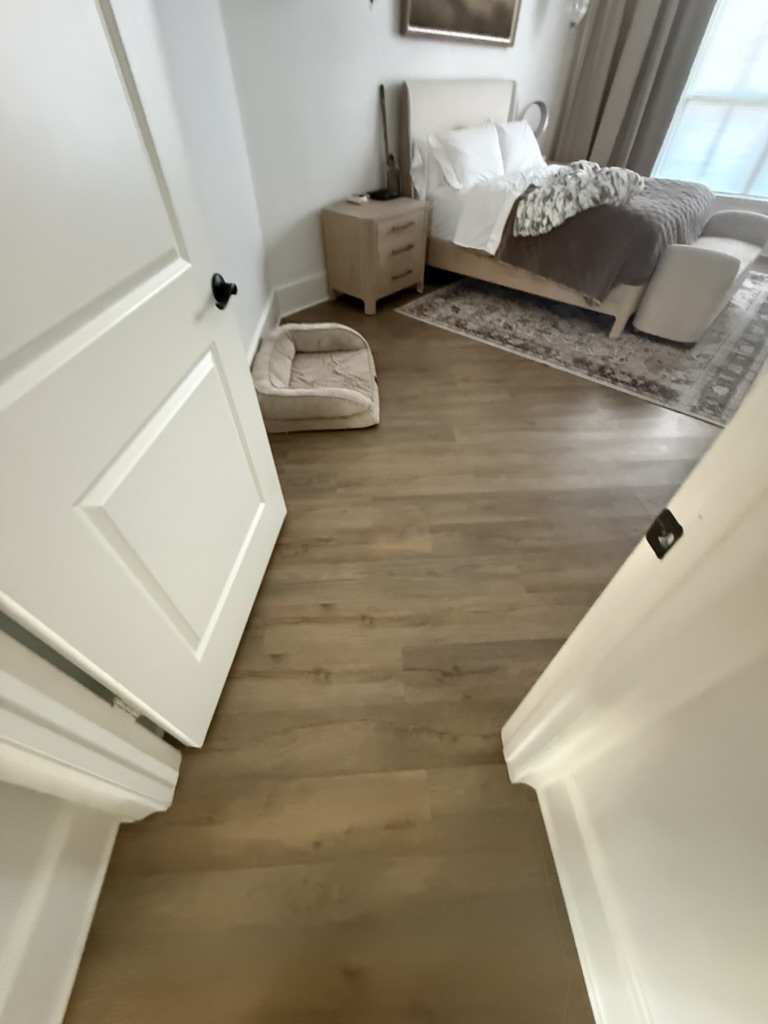
    The sitting room off the entryway — all-new floor, freshly painted walls, ready to furnish.

    Project Overview

    • Full LVP flooring installation in the living room, kitchen, hallways, entry, staircase, all bedrooms, all bathrooms — ideal after a pipe burst flooring incident in Rowlett TX
    • Interior painting throughout walls, ceilings, trim
    • Full masking and prep on all cabinets, fixtures, and built-ins before painting
    • Staircase tread and riser replacement to match new flooring
    • Exterior power washing to finish the project clean
    • Location: Rowlett, Texas (Dallas County / Rockwall County border area)

    Dealing with Water Damage in Your Home?

    If a pipe burst or water event has left you looking at damaged floors, stained walls, and a house that needs to be put back together, we can help. We work throughout Rowlett, Garland, Sachse, Wylie, Rockwall, and the broader Dallas metro area. We’ll come take a look, give you a straight number, and be honest about what the job actually involves. If your flooring has been impacted by a pipe burst in Rowlett TX, our specialized team can restore your home quickly and beautifully.

    Call us at (903) 513-3065 or reach out through our contact page. We’ll get out to your property and walk through it with you.

    More Photos From This Project

    About Apex Point Services

    Apex Point Services is a family-owned, veteran-owned general contractor serving North Texas. We provide roofing, remodeling, residential construction, commercial construction, and property improvements across Dallas-Fort Worth, Rockwall County, Collin County, Kaufman County, Hunt County, and surrounding communities.

    Our team is led by Roger Kirby, a U.S. Army veteran with over 20 years of hands-on construction experience. We built this company on the belief that clients deserve honest communication, organized project management, and quality workmanship — not just a low bid and a handshake.

    Ready to discuss your project? Call (903) 513-3065, email info@apexpointservices.com, or visit our Contact page to request a free estimate. We serve clients throughout North Texas and are happy to answer questions before you decide to move forward.

  • Concrete Driveway Ideas & a Backyard That Works in Rockwall, TX

    Concrete Driveway Ideas & a Backyard That Works in Rockwall, TX

    Some projects are straightforward. Others turn into something bigger once you’re on site. This job in Rockwall, Texas involved concrete work and was a little of both. It’s exactly the kind of concrete driveway work we love.

    The homeowner reached out because they wanted more usable backyard space. They had a rough idea: extend the concrete off the existing patio, and get a pergola started so they’d have a shaded area to actually use in the summer. However, what they didn’t have was a contractor they trusted for both concrete work and pergola construction. They did not want to hand half the job off to someone else.

    That’s where we came in. Whether it’s outdoor living features or complex concrete work, we cover the entire scope, including concrete driveway projects.

    The Concrete Work

    We started with the concrete driveway add-on. The goal was to expand the existing driveway pad and connect it cleanly to the patio area. This would give more room to park, move around, and set up the pergola base. North Texas soil doesn’t play nice with concrete — the clay expands and contracts with the weather. If you don’t cut your control joints right and prep the base properly, you’re going to see cracking inside of a year. This is why experience with all aspects of concrete work is essential for lasting results.

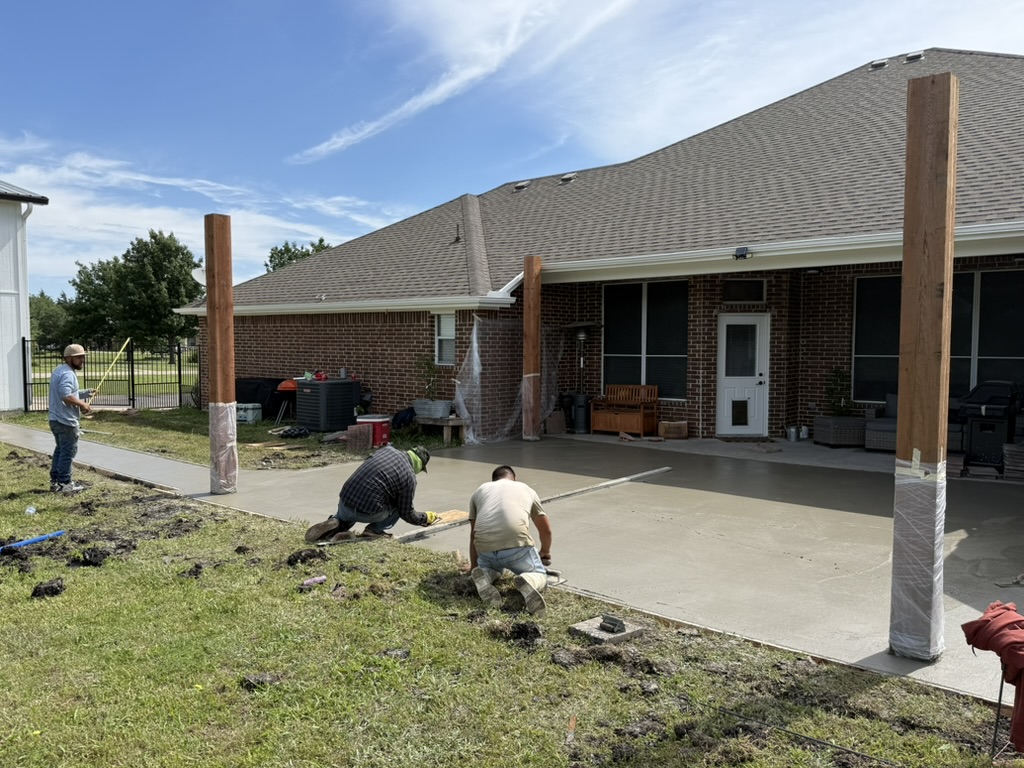
    We dug it out, set the forms, reinforced with rebar, and poured in sections. Our team handled every detail of the concrete work. The crew hand-finished the surface while it was still workable, cutting clean joints to control where any movement happens. By the time we pulled the forms, the concrete driveway looked like it had always been there.

    Setting the Pergola Posts

    While the concrete was curing, we got started on the pergola post layout. The homeowner wanted a structure that would eventually have a full roof system added. Because of this, we set the posts to handle that load — not just decorative four-by-fours that look fine until you try to hang a ceiling fan off them. Both setting posts and quality concrete work demand attention to detail.

    Each post was set into footings poured below the frost line, plumbed, braced, and wrapped at the base to protect against ground moisture. You can see in the photos how the posts are positioned in relation to the fresh concrete. Everything was laid out to give the homeowner a clear, open entertaining area once the structure goes up. Our approach ensures the concrete driveway and entertaining areas are integrated for long-term use.

    This is the kind of thing that matters most at the start. If the posts are off, everything else built on top of them is off. We take that seriously because both structural stability and quality concrete work depend on it.

    Why Local Experience Matters on Jobs Like This

    Rockwall County has specific conditions that out-of-town crews often underestimate. The heat in July and August affects concrete cure times. In addition, the clay soil behind homes in this area shifts seasonally in ways that can work against structures if the foundations aren’t properly set. HOA requirements in many Rockwall neighborhoods mean the work has to look finished, not just functional. With our experience in local concrete work, we know how to plan accordingly for these challenges.

    We’ve done enough work in Rockwall, Heath, and the surrounding area to know what to plan for. We’re not learning on your property. Our concrete work reflects a deep knowledge of these neighborhoods and what a quality concrete driveway needs.

    What This Project Included

    • Concrete driveway extension with rebar reinforcement and hand-finished surface — expert concrete work from start to finish
    • Control joints cut to manage seasonal movement
    • Pergola post footings poured and set below frost line
    • Posts plumbed, braced, and wrapped for long-term weather protection
    • Layout planned around future roof structure load

    Thinking About a Similar Project?

    If you’re in Rockwall, Heath, Fate, Royse City, or anywhere in Rockwall County and you’re thinking about adding concrete work, a pergola, or an outdoor structure to your property — we’d be glad to take a look. We give straight estimates, we show up with our own crew, and we don’t disappear once the check clears. Whatever your concrete driveway or general concrete work needs, just let us know.

    Give us a call at (903) 513-3065 or reach out through our contact page. We’ll set up a time to walk the property and talk through what makes sense for your space — including any concrete work or driveway projects you have in mind.

    Key Takeaways

    • This project in Rockwall, Texas involved both concrete driveway work and pergola construction.
    • Homeowners wanted to extend their concrete patio for more usable backyard space and needed a reliable contractor.
    • The concrete driveway was expertly reinforced with rebar and carefully finished to ensure durability and integrate with the pergola posts.
    • Local experience is crucial as Rockwall’s clay soil can affect concrete stability and HOA standards dictate appearance.
    • If you’re considering a concrete driveway or outdoor structure in the area, the team offers reliable estimates and expert services.

    Estimated reading time: 5 minutes

    About Apex Point Services

    Apex Point Services is a family-owned, veteran-owned general contractor serving North Texas. We provide roofing, remodeling, residential construction, commercial construction, and property improvements across Dallas-Fort Worth, Rockwall County, Collin County, Kaufman County, Hunt County, and surrounding communities.

    Our team is led by Roger Kirby, a U.S. Army veteran with over 20 years of hands-on construction experience. We built this company on the belief that clients deserve honest communication, organized project management, and quality workmanship — not just a low bid and a handshake.

    Ready to discuss your project? Call (903) 513-3065, email info@apexpointservices.com, or visit our Contact page to request a free estimate. We serve clients throughout North Texas and are happy to answer questions before you decide to move forward.

  • How to Hire a General Contractor in North Texas: 7 Things to Know

    Hiring a general contractor in North Texas is one of the most important decisions you’ll make for your home or business. Whether you’re planning a roof replacement in Garland, a kitchen remodel in Rockwall, or a commercial build-out in Dallas, choosing the right GC sets the tone for everything — timeline, budget, quality, and your peace of mind.

    This guide breaks down the 7 most important things to know before you hire a general contractor in the DFW area and North Texas.

    1. Understand What a General Contractor Actually Does

    A general contractor (GC) is the person who takes ownership of your entire project from start to finish. They’re not just a guy swinging a hammer — they’re a project manager, a coordinator, and your single point of accountability. A GC handles:

    • Pulling permits from your city or county
    • Hiring and scheduling licensed subcontractors (plumbers, electricians, roofers, framers)
    • Ordering and managing materials
    • Keeping the job on schedule and on budget
    • Communicating with you at every stage
    • Ensuring all work passes inspection

    When you hire a GC instead of managing subcontractors yourself, you’re buying something valuable: one phone number, one contract, and one person responsible for the outcome. For any project bigger than a single-trade job — a bathroom remodel, an addition, a new roof, or a commercial build-out — a general contractor pays for itself.

    2. Know That Texas Has No Statewide GC License Requirement — But That Doesn’t Mean Anything Goes

    Here’s something many North Texas homeowners don’t realize: Texas does not require a statewide general contractor license. Unlike states such as Florida or California, any person can legally call themselves a general contractor in Texas.

    So what should you look for instead? Three things:

    • General liability insurance — protects you if the contractor damages your property or someone is injured on the job. Ask for a Certificate of Insurance before signing anything.
    • Workers’ compensation coverage — covers their crew if someone gets hurt on your property. Without it, you could be held liable.
    • Local permits and compliance — a legitimate GC knows your city’s permitting process and will pull the right permits. If a contractor asks you to “skip the permit to save money,” walk away.

    At Apex Point Services, we carry full general liability insurance and handle all permitting for every project we take on in Dallas, Garland, Rockwall, and across North Texas. We’re happy to provide our certificate of insurance before you sign a single document.

    3. Always Get Multiple Written Bids — And Know What to Compare

    Getting 2–3 bids is standard practice, but a lot of homeowners compare the wrong thing: the bottom-line number. The cheapest bid is not always the best value — and it’s often a red flag.

    When reviewing bids, compare:

    • Scope of work — Are all three bids quoting the same materials and the same work? A cheap bid often skips line items the others include.
    • Materials specified — Does the bid name the brand and grade of shingles, lumber, tile, or fixtures? “Standard materials” is not an acceptable answer.
    • Timeline — When does work begin and what is the estimated completion date?
    • Payment schedule — Legitimate contractors require a deposit (10–25% is normal), progress payments, and a final payment at completion. Anyone asking for more than 50% upfront is a warning sign.
    • Warranty — What warranty does the contractor offer on their workmanship, separate from manufacturer warranties?

    A written bid protects both parties. Never start a project based on a verbal quote alone.

    4. Check Reviews and Ask for References From Recent Local Jobs

    In North Texas, word-of-mouth is everything — and today that means Google reviews. Before hiring any contractor, search their business name and look at their Google Business Profile. Look for:

    • Reviews that mention specific projects similar to yours
    • How the contractor responds to negative reviews (this tells you a lot about how they handle problems)
    • Reviews from your area — a company with reviews from Garland, Rockwall, and Wylie knows local codes and suppliers
    • Recency — a company with 15 reviews from 4 years ago and nothing recent may not be active

    Also ask the contractor directly for 2–3 references from jobs completed in the past 6–12 months. A reputable GC should have these ready without hesitation. Call those references and ask: Did they stay on budget? Did they communicate? Would you hire them again?

    5. Nail Down the Contract Before Any Work Begins

    A solid contract is your best protection. Before any crew sets foot on your property, make sure your contract includes:

    • Full project description — exactly what is being built, replaced, or remodeled
    • Material specifications — brands, grades, colors, model numbers where applicable
    • Start and completion dates — with language about what happens if they miss them
    • Payment schedule tied to milestones, not just calendar dates
    • Change order process — how cost changes are approved in writing before work proceeds
    • Lien waiver policy — ensures subcontractors and suppliers are paid so no liens end up on your property
    • Dispute resolution — how disagreements are handled

    If a contractor resists putting something in writing, that’s your answer.

    6. Understand the Difference Between a GC and a Specialty Contractor

    A lot of homeowners in North Texas call a roofing company for a roof, a tile company for flooring, and a plumber for bathrooms — managing multiple contracts themselves. This works for single-trade jobs, but it creates real problems on multi-trade projects.

    When you’re your own general contractor, you’re responsible for scheduling, sequencing, and coordination. You’re on the hook if the electrician’s rough-in isn’t done before the drywall crew shows up. You’re dealing with 4 different phone numbers when problems arise.

    A general contractor absorbs all of that complexity. For projects involving multiple trades — any remodel, new construction, addition, or commercial project — hiring a GC is almost always the smarter financial decision. The management fee (typically 10–20% of project cost) is often offset by the contractor’s supplier relationships, their ability to keep subcontractors on schedule, and their experience catching problems before they become expensive.

    7. Look for a Contractor Who Communicates Like a Professional

    The #1 complaint homeowners have about contractors — in North Texas and everywhere else — is communication. Not quality, not price. Communication.

    Before you sign a contract, pay attention to how responsive the contractor is during the bid process. Do they return calls? Are their estimates detailed and professional? Do they explain things clearly without making you feel like you’re wasting their time?

    The way a contractor communicates before they’re hired is exactly how they’ll communicate once the check clears. A contractor who takes 4 days to return your call during bidding will not magically become attentive once work begins.

    At Apex Point Services, communication is a core part of how we operate — it’s something Roger brought directly from his military background. Every client gets clear timelines, honest updates, and a direct line to the team managing their project.

    Ready to Hire a General Contractor in North Texas?

    Apex Point Services is a veteran-owned general contracting company based in Garland, TX. We serve homeowners and businesses across Dallas, Rockwall, Heath, Rowlett, Wylie, Plano, McKinney, Forney, Royse City, Terrell, Mesquite, Greenville, and the surrounding DFW Metroplex.

    We handle roofing, residential construction, commercial construction, kitchen remodeling, bathroom remodeling, additions, and commercial improvements. Every project comes with a written contract, full insurance documentation, and a team that answers the phone.

    Call us at (903) 513-3065 or fill out our contact form for a free estimate. We’ll respond within one business day.

    Key Takeaways

    • Hiring a general contractor in North Texas is crucial for your project’s success and peace of mind.
    • Texas lacks a statewide GC license requirement, so prioritize general liability insurance and workers’ compensation.
    • Always get multiple written bids and compare scope, materials, and payment schedules for a better understanding of value.
    • Check reviews, ask for recent references, and ensure the contractor communicates effectively throughout the process.
    • Make sure to nail down a detailed contract before work begins to protect yourself and ensure project clarity.

    Estimated reading time: 6 minutes

  • Seasonal Home Maintenance Tips for North Texas Homeowners

    If you own a home in the DFW area, you already know that North Texas weather can take a serious toll on your property. From scorching summer heat to sudden hail and ice storms, the demands on your home’s exterior — and interior — are intense year-round. Knowing what maintenance tasks to tackle each season can save you thousands in repair costs and keep your home looking its best.

    Spring Home Maintenance in North Texas

    Spring is the most important time for home inspections in Dallas, Rockwall, and surrounding areas. After winter ice and spring storms, you’ll want to address:

    • Inspect your roof for missing shingles or hail damage
    • Check gutters and downspouts for debris and clogs
    • Look for cracks in exterior siding or brickwork
    • Test your HVAC system before summer heat arrives
    • Check for foundation shifts or settling that occurred over winter

    Early detection of these issues can prevent costly repairs down the road.

    Summer Prep: Protect Your Home from Texas Heat

    Summer in North Texas means triple-digit temperatures and intense UV exposure. Before the heat peaks:

    • Ensure attic insulation is adequate to reduce cooling costs
    • Seal any gaps around windows and doors with weatherstripping
    • Check your roof’s ventilation to prevent heat buildup
    • Re-stain or seal deck and exterior wood surfaces to prevent cracking and fading

    A well-sealed, well-ventilated home can significantly reduce energy bills during the hot summer months.

    Fall Maintenance: Get Ready for Winter

    Fall is the time to prepare for the cold snaps and ice storms that can hit the DFW area. Key fall tasks include:

    • Clean gutters after leaves fall
    • Have your fireplace and chimney inspected and cleaned
    • Check plumbing for any exposed pipes that may need insulation
    • Schedule roofing or exterior repairs before freezing temperatures make them difficult

    In North Texas, a mild fall is the perfect window for completing exterior projects before winter arrives.

    When to Call a General Contractor

    Some maintenance tasks are DIY-friendly, but others require a licensed professional. Always hire a qualified general contractor for:

    • Structural changes or additions
    • Roofing repairs and replacements
    • Electrical work
    • Plumbing
    • Any project requiring permits

    If you’re not sure whether your project needs a permit in Rockwall, Garland, Plano, or McKinney, your contractor can advise you and handle the permit process on your behalf.

    Seasonal Home Services in North Texas

    Apex Point Services offers seasonal home maintenance and repair services across Dallas, Rockwall, Garland, Rowlett, Heath, Plano, McKinney, Forney, Terrell, and surrounding communities. Whether you need a post-storm roof inspection, exterior repairs, flooring replacement, or a complete remodel, our team is ready to help.

    Contact Apex Point Services today to schedule a free home assessment and keep your North Texas home in peak condition year-round.

  • How Much Does a Kitchen or Bathroom Remodel Cost in the DFW Area?

    Thinking about remodeling your kitchen or bathroom in the DFW area? You’re not alone — home renovations are booming across North Texas, and for good reason. Whether you’re updating an outdated space or preparing your home to sell, a well-planned remodel can significantly increase your home’s value and your quality of life. Here’s what you need to know before starting your remodel in Dallas, Rockwall, Plano, McKinney, or the surrounding area.

    Average Kitchen Remodel Cost in DFW

    Kitchen remodel costs vary widely depending on the size of the kitchen, the materials chosen, and the extent of the work. In the DFW area, a minor kitchen refresh (new countertops, hardware, paint) might run $10,000–$20,000, while a mid-range remodel with new cabinets, countertops, flooring, and appliances typically costs $25,000–$60,000. A full, high-end kitchen transformation can exceed $80,000 or more depending on custom cabinetry, appliances, and layout changes.

    Average Bathroom Remodel Cost in DFW

    Bathroom remodels are among the best investments a homeowner can make. In North Texas, a guest bathroom update typically costs $8,000–$15,000, while a full primary bathroom remodel with new tile, fixtures, vanity, and shower can run $20,000–$50,000. As with kitchens, the final cost depends heavily on material choices and whether the layout changes require moving plumbing.

    Factors That Affect Your Remodel Cost

    Several factors influence the total cost of any remodel project. Permit requirements, the age of your home, existing plumbing and electrical conditions, and material lead times all play a role. In Rockwall and surrounding Collin and Kaufman counties, permits are required for structural, electrical, and plumbing work — your contractor should handle all permitting as part of the project.

    How to Get the Most Value from Your Remodel

    To maximize your return on investment, focus on quality materials and timeless design choices rather than trendy finishes that may look dated in a few years. Kitchen and bathroom remodels consistently offer some of the highest ROI of any home improvement project. Work with a contractor who will help you prioritize your budget so you get the most value for your investment.

    Remodeling Contractors Serving the DFW Area

    Apex Point Services specializes in kitchen and bathroom remodeling across Dallas, Rockwall, Plano, McKinney, Garland, Rowlett, Heath, Forney, Terrell, and surrounding North Texas communities. As a family-owned, veteran-owned general contractor, we bring the same dedication and precision to every remodel project that we bring to our clients and our community.

    Contact us today for a free consultation and estimate on your kitchen or bathroom remodel in the DFW area.